CVC Word Activities Your Kindergartner Will Actually Want to Do
CVC stands for consonant-vowel-consonant, and these short words (cat, hop, pin, sun) are the first ones most children decode independently. When a child sounds out their very first word and looks up with that particular expression of surprised pride, CVC words are almost always the reason. The activities below make the practice feel like play.
Why Word Families Work So Well
Rather than drilling individual words in isolation, word families teach children to recognise a pattern and generate new words from it. Once a child knows the "-at" family, they can read cat, bat, hat, mat, rat, and sat — six words for the price of one.
Word family work also builds phonemic awareness, which is the ability to hear and manipulate individual sounds in words. This skill is one of the strongest predictors of early reading success.
5 Hands-On CVC Activities
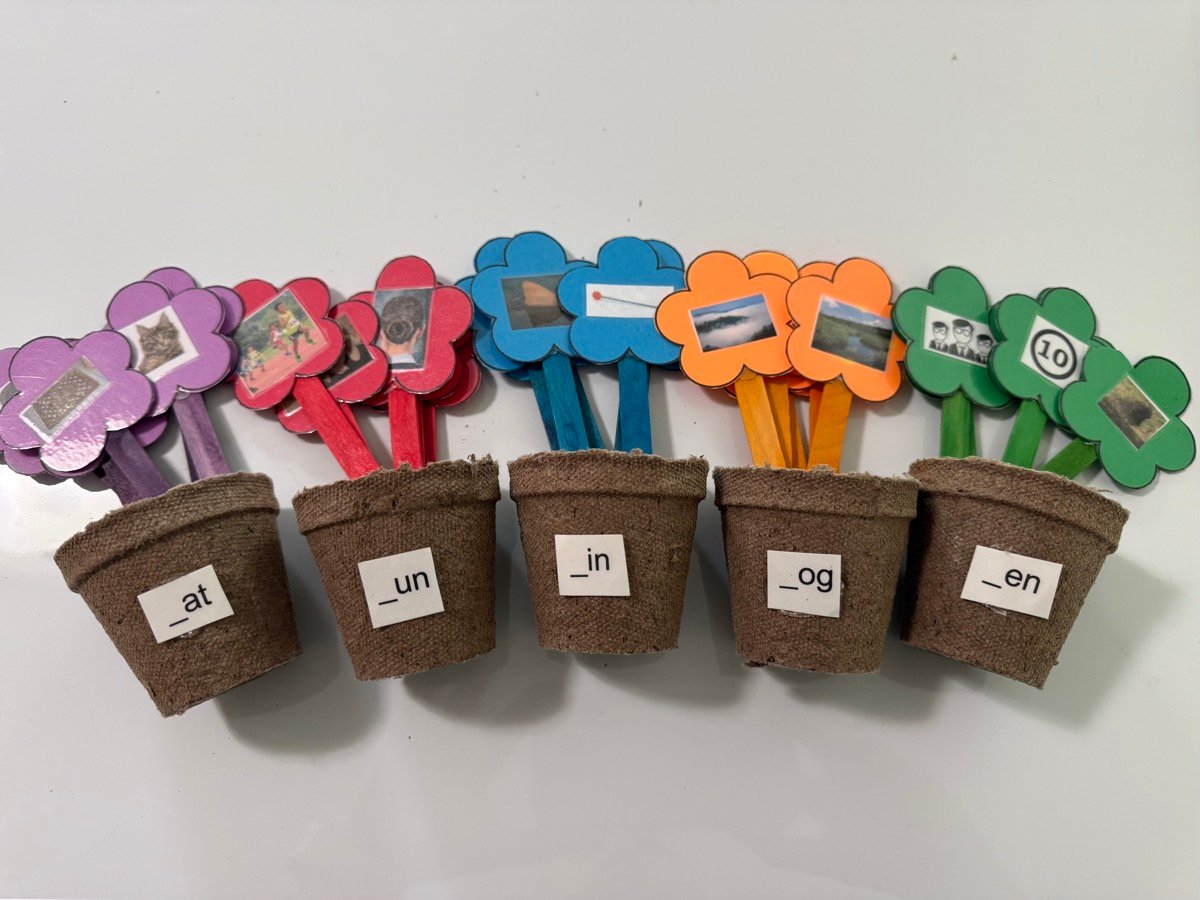
1. Word family sorting. Write three or four word endings (_at, _og, _in) on separate flower pots, bowls, or cards. Print or write word cards and have the child sort them into the right family. Our Word Family Flower Pots make this work self-correcting and visually appealing.
2. Word building with moveable letters. Lay out a short vowel sound and swap consonants on either side. "Can you change 'cat' to 'bat'?" is more engaging than a worksheet and builds the understanding that words are made of moveable parts.
3. Write the room. Post CVC word cards or pictures around the room and give children a clipboard and recording sheet. They walk around, find the words, and write them down. The movement makes it memorable.
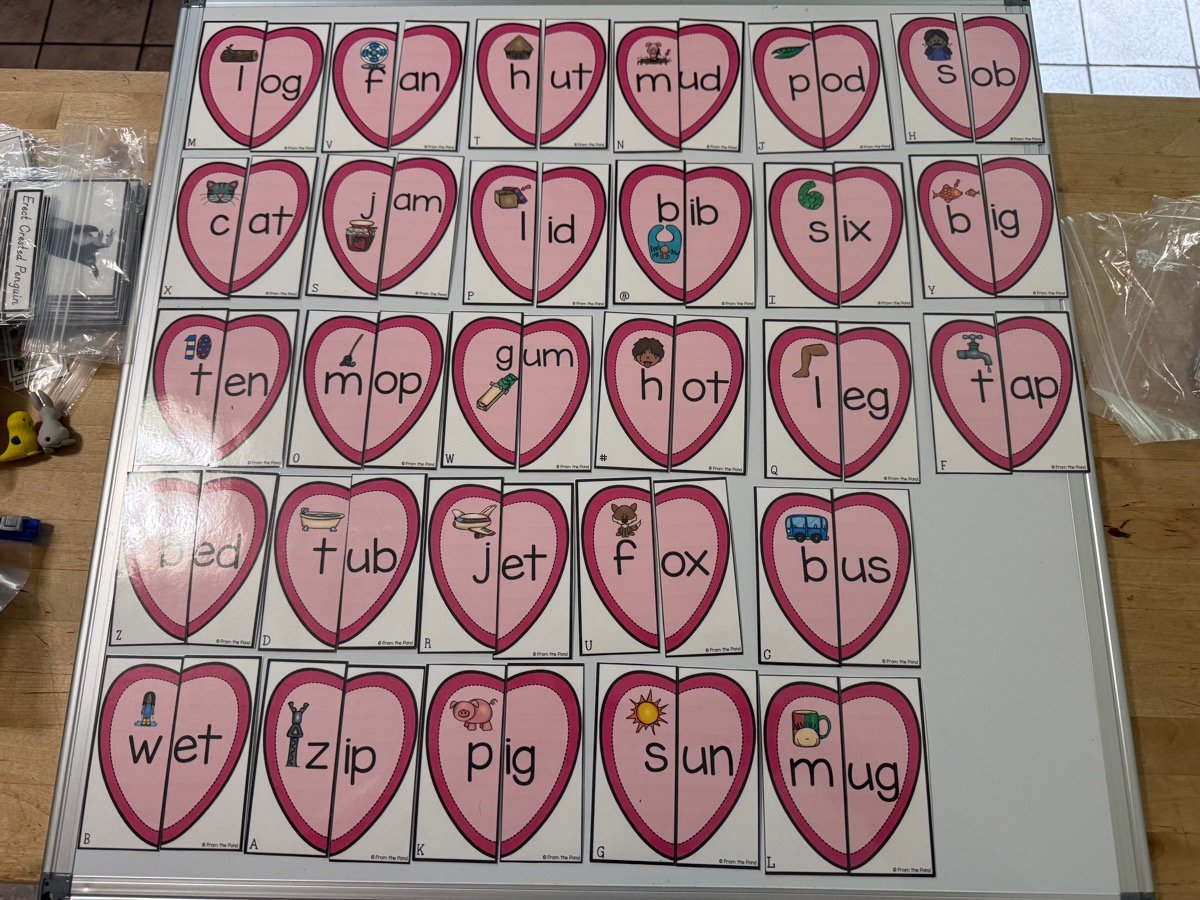
4. Valentine's word building. Our Valentine's Day Word Building cards use a heart theme to make short-vowel CVC practice feel festive in February — or any time you need a reset from a routine.
5. Playdough words. Roll playdough into letter shapes to spell CVC words. The motor planning involved in forming letters reinforces letter-sound connections through a different modality.
When to Introduce CVC Work
Children are ready for CVC word work when they can reliably identify the sounds of all 26 letters (not just their names, but their sounds). In Montessori, this typically happens after the sandpaper letters and before or alongside the moveable alphabet.
In a traditional kindergarten context, CVC work usually begins in the first few months of the school year. If a child is ready earlier, there's no reason to wait — the activities described above work beautifully for motivated 4-year-olds too.
Frequently Asked Questions
What order should I introduce CVC word families?
Most reading programs start with short "a" words (cat, hat, map) because the short "a" sound is very distinct and easy to hear. From there, short "i" and short "o" are common next steps. Short "e" and short "u" tend to be harder for children to distinguish and come later.
My child memorises words instead of sounding them out — is that a problem?
Some sight-word memorisation is normal and even helpful for very common words. But for CVC work specifically, the goal is decoding — using letter-sound knowledge to read an unfamiliar word. If a child is guessing from context rather than decoding, try covering all but the first letter and asking what sound it makes.
How long should a CVC work session last?
For most kindergartners, 10–15 minutes of focused phonics work is plenty. The activities above are designed to feel like games, so children often choose to continue longer than you might expect — but it's fine to keep sessions short and end while they're still enjoying it.