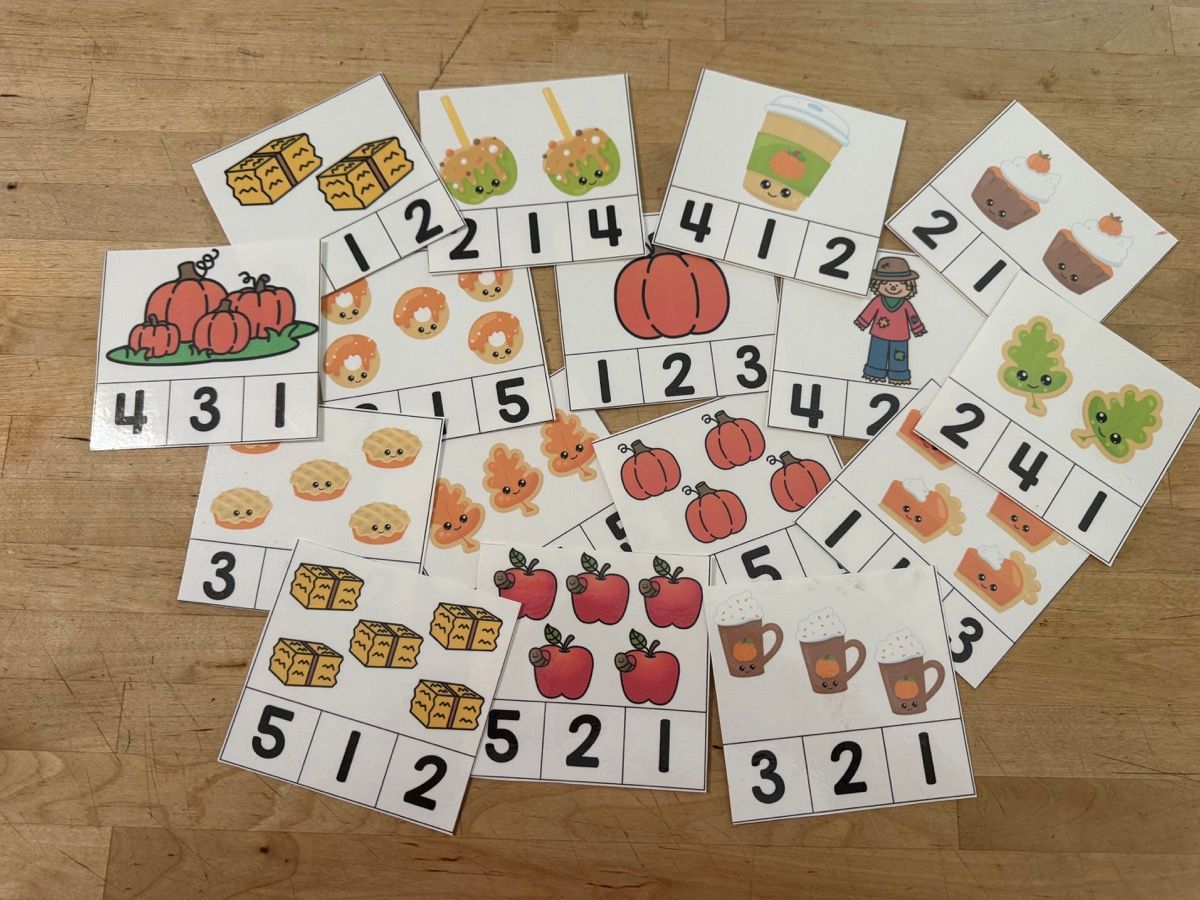
Fall Count and Clip Cards
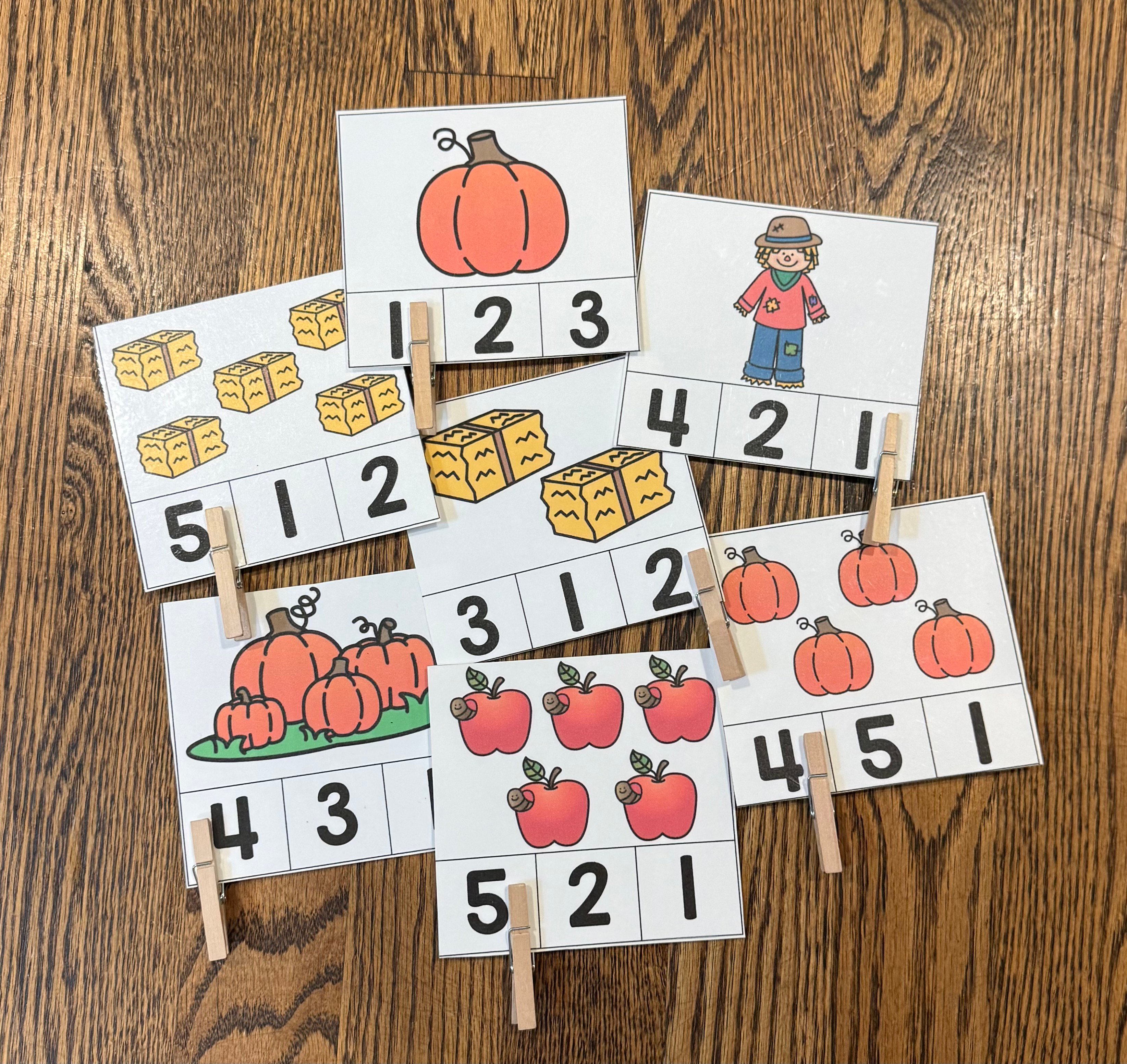
Clip cards are one of the most classroom-friendly formats in early childhood math. They're self-correcting, reusable, and the physical action of clipping builds the exact pincer grip children need for writing. Add fall-themed images — pumpkins, apples, scarecrows, hay bales — and you have a counting work that stays on the shelf from September through November.
What You'll Need
A set of fall-themed count and clip cards, each showing a different number of fall objects with three number choices along the bottom.
A small basket of wooden clothespins — one per child, or several if children are working simultaneously.
How to Do the Activity
The child picks up a card, counts the objects shown, and clips a clothespin onto the number that matches.
Work through the cards one at a time. Some children prefer to do them all and then check; others check as they go. Both are fine.
To self-check: mark a small dot on the back of each card next to the correct answer. The child flips the card to see if their clip is in the right spot.
Classroom Tips
Keep the clothespins in a small basket next to the card stack so children can set up and clean up independently.
For children who are still developing counting accuracy, encourage them to move their finger to each object as they count — one touch per number — rather than scanning the image.
These cards work beautifully as a transition activity, a morning work choice, or a small-group math rotation.
Frequently Asked Questions
What number range works best?
Cards covering 1–5 are appropriate for most Pre-K children. Kindergartners can typically handle 1–10. If you have a mixed-age group, use both sets and let children self-select.
What if a child consistently gets the wrong answer?
Watch how they count. The most common error at this stage is counting an object twice or skipping one. Practice one-to-one correspondence (one touch = one count) before returning to the clip cards.
Can I use these for small group instruction?
Yes — have each child in the group work with the same card at the same time, then discuss: "How many did you count? Did anyone get a different answer?" The conversation is often as valuable as the counting.