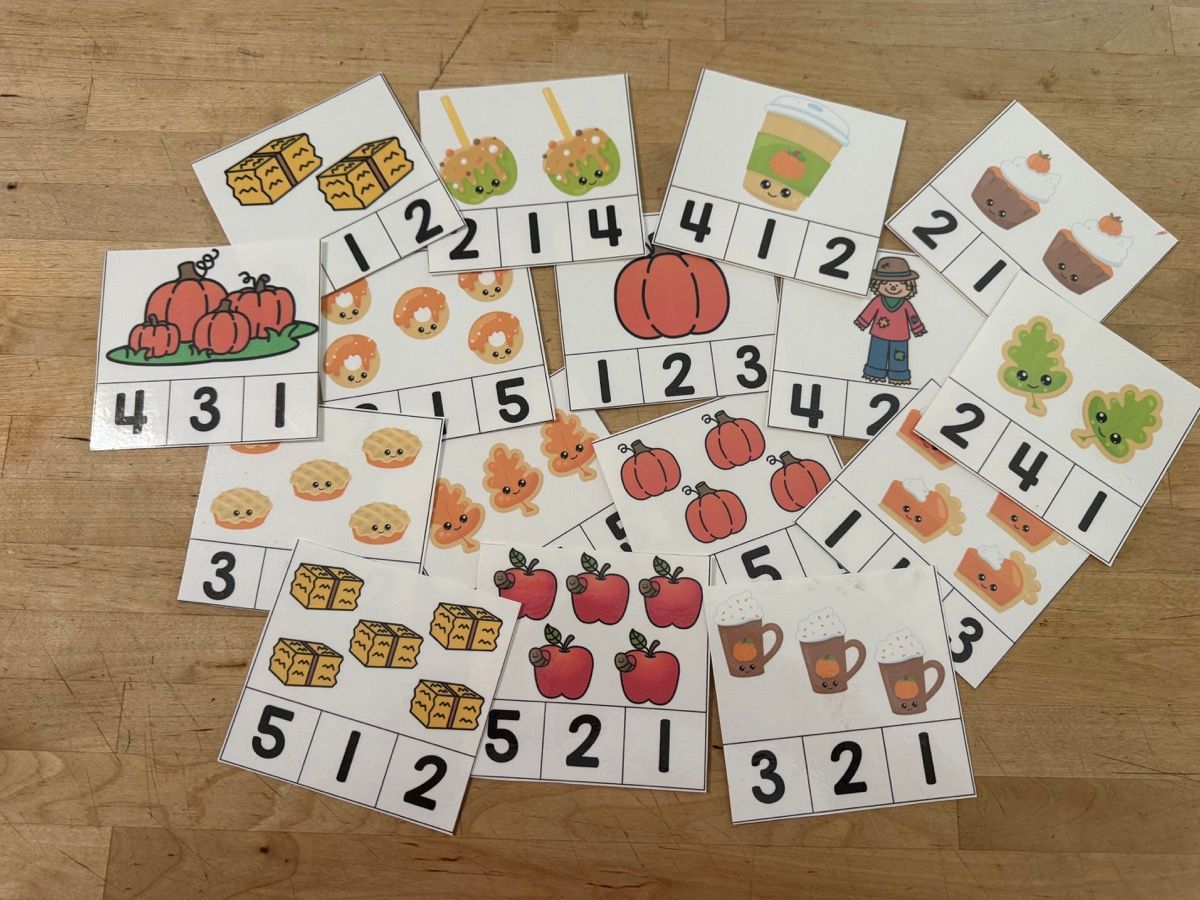
Fall Number Sequencing Puzzle
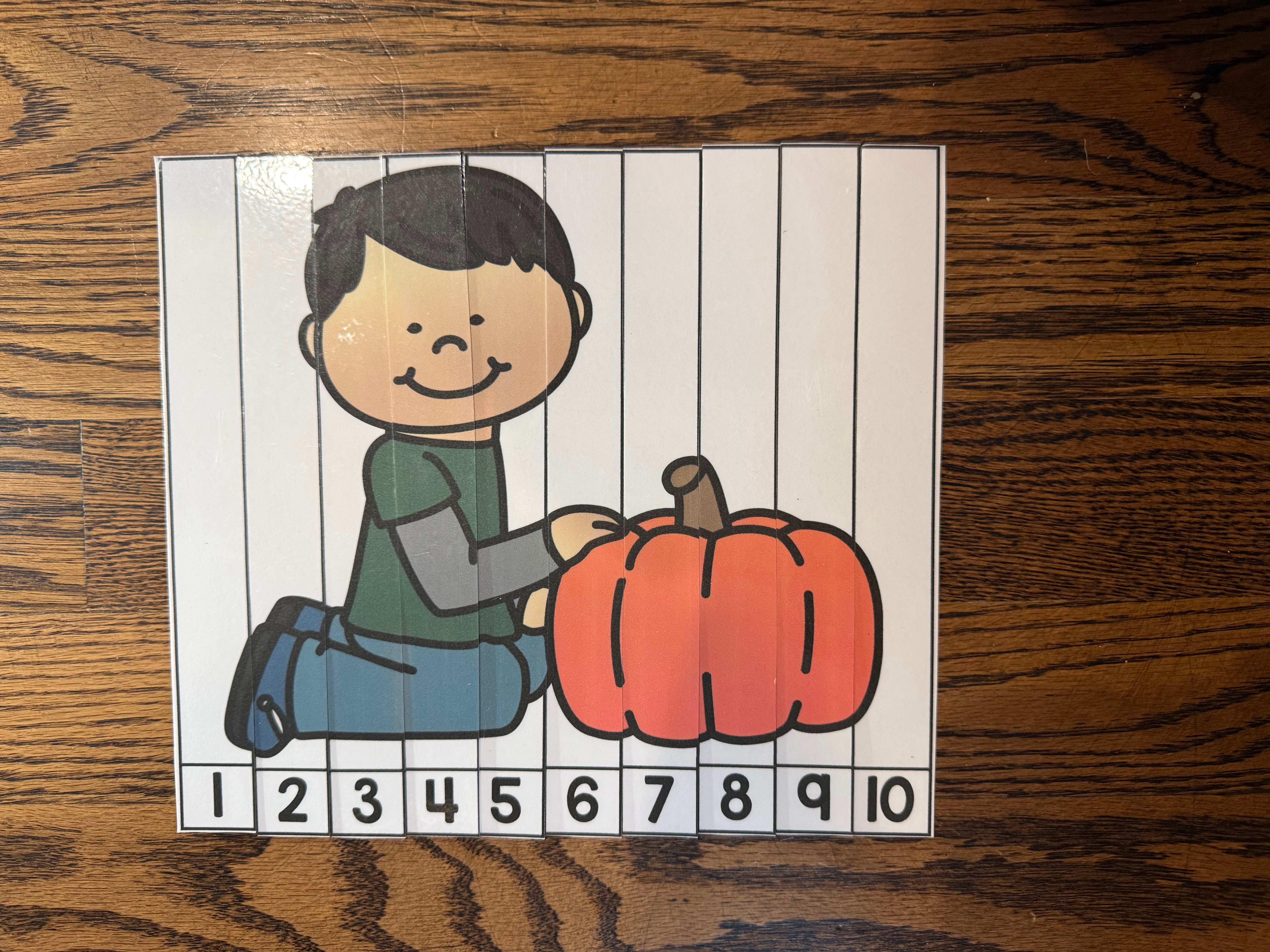
Number sequencing puzzles are wonderfully versatile — they look like a simple put-it-in-order task, but the thinking involved is much richer. A child who can sequence 1 to 10 reliably understands that numbers have a fixed order, that each number is one more than the last, and that the sequence has a start and an end. This fall version wraps all of that in a pumpkin patch.
What You'll Need
Numbered picture strips, 1 through 10, each showing part of a fall scene (a pumpkin patch with a child).
A flat work surface where the strips can be laid out in a row.
How to Do the Activity
Mix up the numbered strips and place them in a pile or scattered on the mat.
The child arranges the strips in order from 1 to 10, left to right, until the full scene comes together. The image itself acts as a self-check — if the picture looks right, the sequence is right.
For an added challenge, flip the strips face-down after completing them and have the child try to recall the order from memory.
Extending the Work
Once forward sequencing (1–10) is easy, invite the child to reverse it (10–1). This sounds simple but requires a fundamentally different kind of thinking and takes longer to develop.
You can also use the strips for number recognition alone — hold one up and ask the child to say the number without looking at adjacent strips for clues.
Pair this work with a ten-frame or bead stair so children connect the numeral on the strip to an actual quantity.
Frequently Asked Questions
What age is this appropriate for?
Most children are ready for 1–10 sequencing between ages 3.5 and 5. Younger children may need to work with fewer strips (1–5) first. Older children can work with strips going up to 20.
How is this different from just counting?
Counting is reciting a sequence by memory. Sequencing requires a child to look at symbols (numerals) and arrange them — a step up that connects the spoken sequence to its written form.
Can I make my own version at home?
Yes — take any horizontal image and cut it into 10 equal strips, then write the numbers 1–10 along the bottom. The image can be anything: a family photo, a favourite book cover, a piece of the child's own artwork.