Montessori Math Materials You Can Use at Home (No Expensive Beads Required)
Montessori math has a reputation for requiring elaborate (and expensive) materials — golden bead chains, stamp games, coloured bead bars. And while those materials are wonderful in a fully equipped classroom, the core ideas behind Montessori math can be brought home with much simpler tools. The principle is always the same: children need to hold quantity in their hands before they can understand it on paper.
The Concrete-to-Abstract Principle
Traditional math instruction often moves too quickly to symbols. A child is shown that 3 + 4 = 7 on paper before they have a felt sense of what "three" and "four" actually mean as quantities.
Montessori math delays the jump to abstract notation. First, a child works with physical objects — beads, counters, tiles — and builds the quantity with their hands. Only after that physical foundation is solid do written numbers and equations enter the picture.
This approach produces children who understand math rather than merely execute procedures. The activities below all follow this progression.
The Bead Stair: Understanding Quantity 1–10
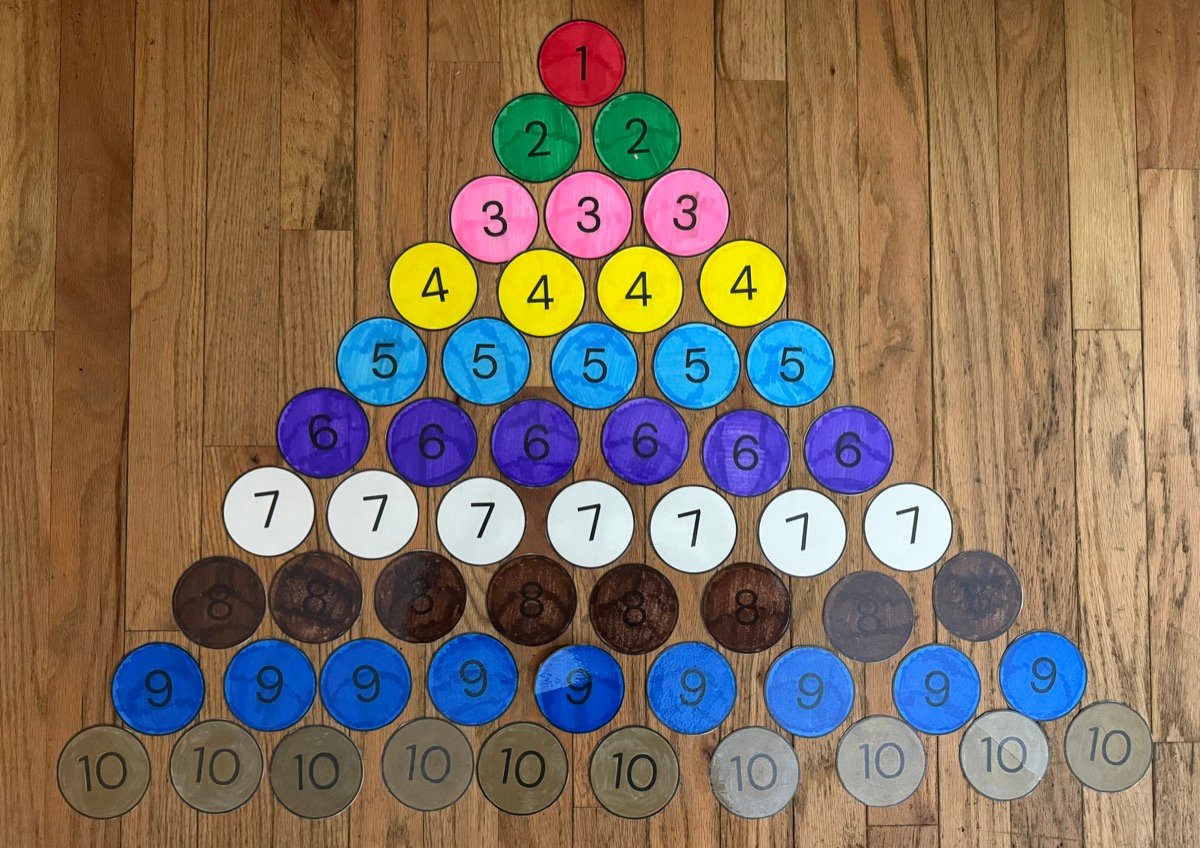
The bead stair is a colour-coded set of bead bars — one red bead for 1, two green beads for 2, three pink beads for 3, all the way to ten. Each number has its own colour, so children begin to associate a colour with a quantity even before they can read the numeral.
Work with the bead stair by laying the bars out in stair-step order, counting the beads on each bar together. Ask questions: "Which bar has more?" "What comes after the blue bar?" Over time, children memorise the colours as a shorthand for quantities, which is a powerful bridge to mental math.
Our printed bead stair cards bring the same colour-coding to a flat, storable format — perfect for home use without the physical beads.
Ten Frames: Building Number Sense Beyond 10
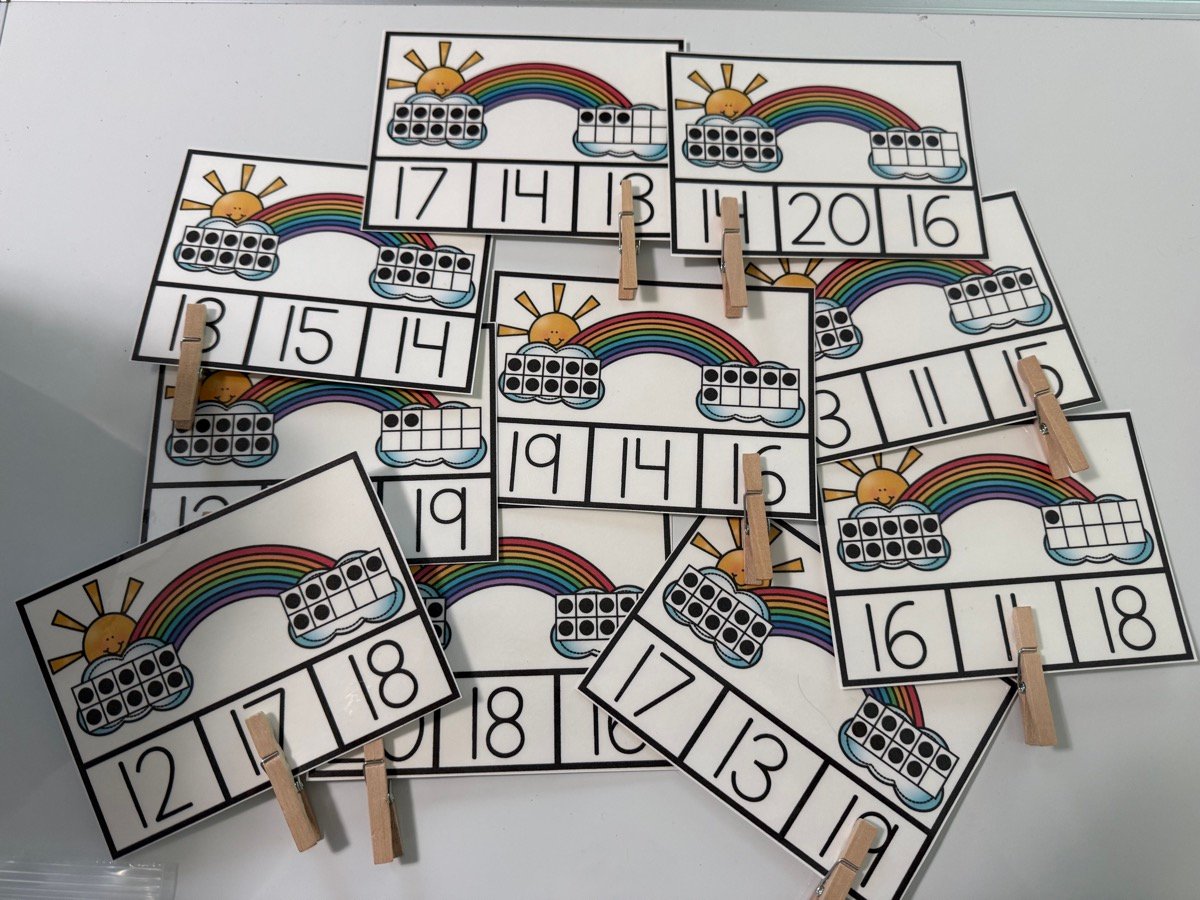
A ten frame is a simple 2×5 grid. Children fill it with counters and develop a visual sense of how numbers relate to ten — the most important anchor number in our base-ten system.
Ten frames make "11 is one more than 10" and "18 is two less than 20" visually obvious in a way that numerals alone never can. Our Ten Frames Clip Cards cover numbers 11–20 in a self-correcting format: children count the dots and clip the correct number, then check by flipping the card.
Tally Marks and Clip Cards
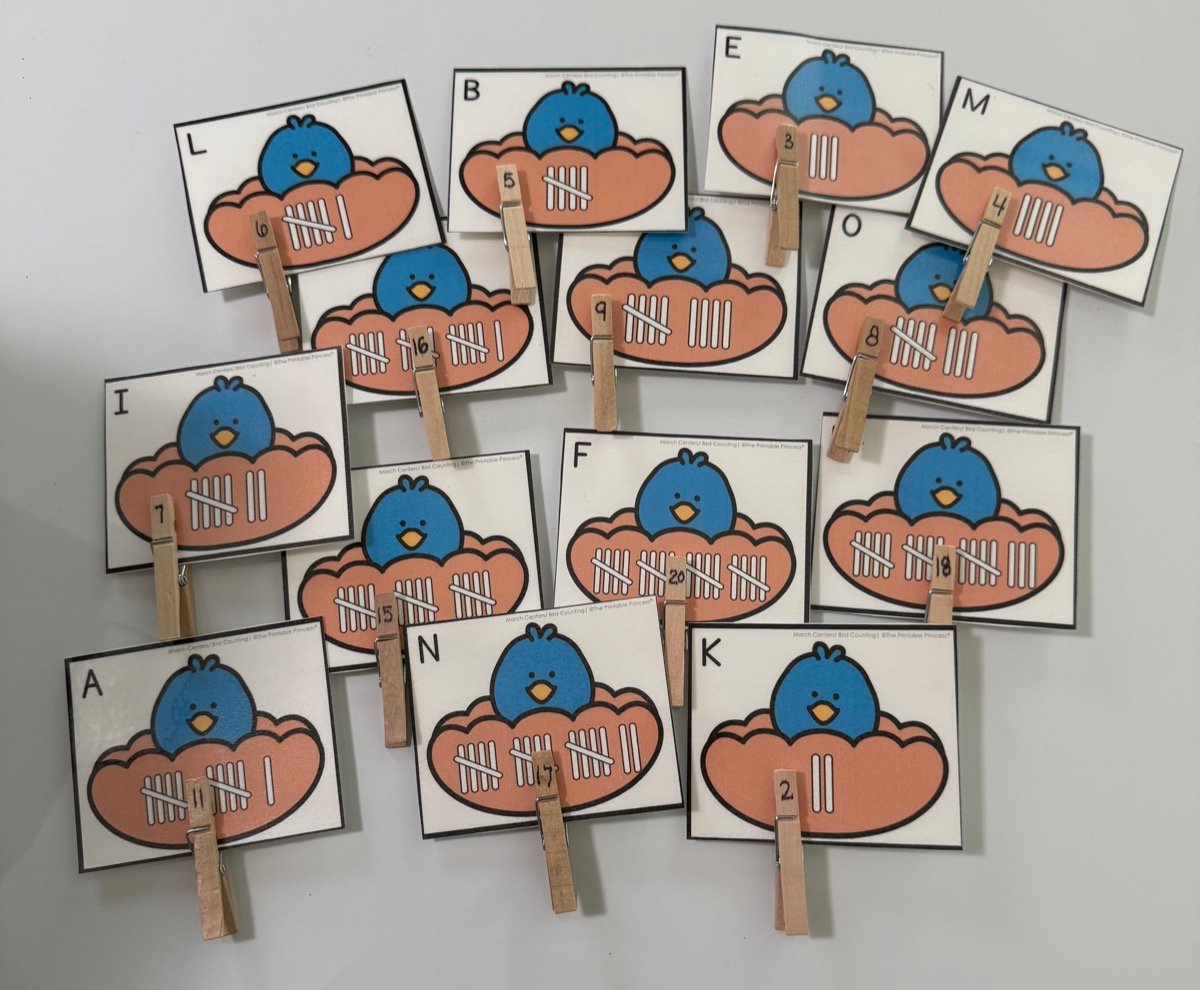
Tally marks are a beautiful bridge between counting and numerals. Children encounter them in games, scorekeeping, and classroom routines, and the grouping-by-five structure prepares them for skip counting and multiplication later on.
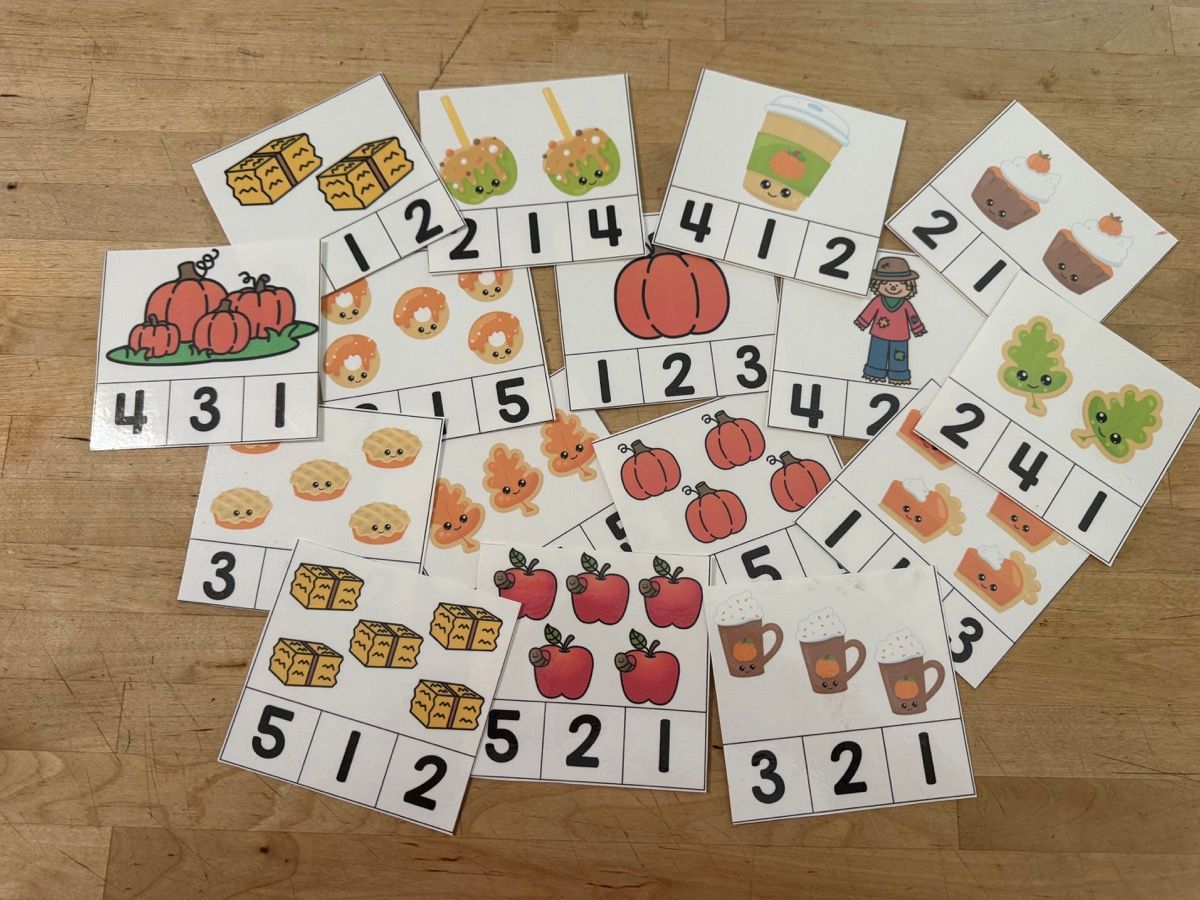
Clip cards are one of the most versatile formats in early childhood math. A child counts the objects (or tally marks), finds the correct numeral, and clips a clothespin to it. The physical action of clipping builds fine motor skills and the self-correcting format builds independence.
Seasonal themes — fall leaves, Halloween pumpkins — keep the same core skill feeling fresh throughout the year.
Frequently Asked Questions
At what age should children start Montessori math work?
Many children show interest in counting and quantity as early as age 2.5–3. Simple work like placing objects on numbered cards or counting bead bars is appropriate at this age. Ten frames and tally marks are usually introduced around 4–5, when children are ready to work with quantities up to 20.
Do I need to buy a full Montessori math set?
No. The golden bead material and large bead chains are beautiful, but they're not necessary for a home environment. The most important thing is working with concrete quantities before abstract numerals. Printed bead stairs, ten frames, and clip cards give you that progression at a fraction of the cost.
How is Montessori math different from regular kindergarten math?
The biggest difference is pacing and concreteness. Montessori math stays with physical materials much longer than traditional programs, and children work individually rather than all learning the same concept at the same time. There's also an early introduction to very large numbers (the thousand cube) which builds a sense of scale that traditional programs often delay.
My child already knows how to count — do these materials still help?
Counting and understanding quantity are different skills. A child who can count to 20 by rote may not yet have a solid sense of what "17" means as a quantity. The ten frames and bead stair build that understanding, which is the foundation for all four operations.