Placemat Weaving: A Fall Paper Weaving Activity
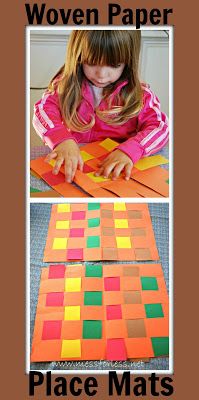
Paper weaving is one of those timeless early childhood crafts that looks impressive but is completely achievable for ages 3–6 with a little preparation and a clear demonstration. Using fall colours — orange, brown, yellow, and green — children create a woven placemat they can actually use on the table at home, which makes the finished product feel special and purposeful.
What You'll Need
One sheet of construction paper per child for the base mat — let children choose their colour.
Pre-cut strips of construction paper in fall colours: orange, brown, yellow, and green. Cut enough so each child can choose six strips.
Scissors (for the teacher to demonstrate cuts, and for children who are ready to make their own).
A glue stick to secure the ends of the strips once weaving is complete.
How to Prepare
Pre-cut the weaving strips in advance — aim for strips roughly an inch wide and long enough to cross the full width of the placemat paper.
Tip: make sure the strips are not the same colour as the child's base paper. If a child picks an orange base, steer them away from orange strips so the weave pattern actually shows up.
How to Do the Activity
Have each child fold their base paper in half lengthways (hot-dog fold).
Starting from the folded edge, make five cuts across the paper, stopping about an inch from the open edge. The cuts should be evenly spaced. This creates the "slots" the strips will weave through.
Open the paper back out flat. Now the fun begins — show children how to weave a strip over the first slot, under the second, over the third, and so on, alternating all the way across.
When the first strip is in, have the child rotate the mat 180° and start the next strip from the other side, this time going under first. Alternating the starting direction makes the classic checkerboard weave pattern.
Continue until all six strips are woven in.
Dab a little glue stick along each end of every strip and press the ends flat against the base paper so nothing slips out.
Why Weaving is Great for This Age
The over-under pattern requires children to track a sequence and hold a rule in mind — a great early patterning and logic exercise. At the same time, threading paper strips develops the hand coordination and bilateral integration that supports writing readiness.
Children who find the full over-under sequence tricky can start with a simpler in-out pattern or have a teacher guide their hand for the first row. Most children get it quickly once they see the physical logic of how the strip passes through.
Frequently Asked Questions
How wide should the cuts and strips be?
About one inch wide works well for ages 3–6 — wide enough to thread easily but narrow enough to fit several strips across the mat. For younger children, go wider (1.5 inches) so the weaving is easier to handle.
What if the strips fall out before the glue is applied?
Hold the finished weave flat on the table and run the glue stick along the ends before the child moves it. It helps to have a teacher or helper hold the strips in place while the child applies the glue.
Can we use different colours than fall colours?
Absolutely — the weaving technique works with any colour combination. Fall colours give it a seasonal theme perfect for October and November, but you could use winter colours in December or rainbow colours any time of year.