Polar Express Sequencing Activity
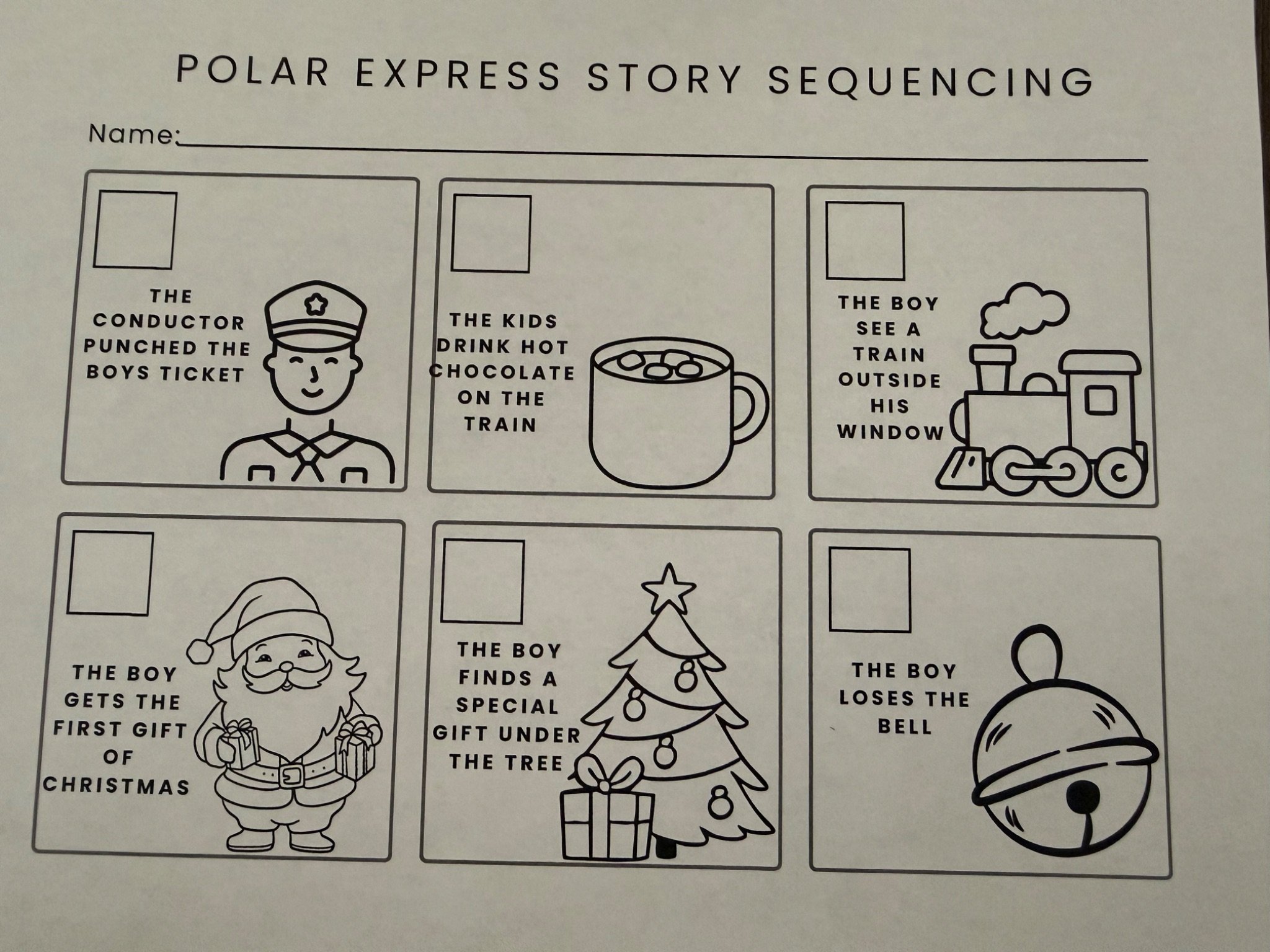
The Polar Express by Chris Van Allsburg is a December classic. This simple follow-up activity gives children a chance to revisit the story's events and practise retelling — a key comprehension skill — by numbering six illustrated squares in the order they happened in the book.
What You'll Need
A copy of The Polar Express by Chris Van Allsburg, one sequencing worksheet per child (with six illustrated story events), crayons or coloured pencils, and a pencil for numbering.
How to Run the Activity
Read The Polar Express aloud at circle time. Read slowly and take time to look at the illustrations together — Van Allsburg's artwork is stunning and worth pausing over.
After reading, gather children at a table (or leave the activity available at an open work area for children to come to independently).
Walk through the sequencing worksheet together as a group: read each of the six squares aloud and discuss what moment from the story each one shows. Some children may need support reading the descriptions depending on their age and reading level.
Children write their name at the top, then number each square from 1 to 6 in the small box, reflecting the order events happened in the book.
When everyone is finished, come back together and review the sequence as a group — children can share their reasoning for the order they chose.
Extension Ideas
Serve hot cocoa while children work — it fits perfectly with the story's famous hot chocolate scene and makes the whole activity feel like an event.
After sequencing, invite children to draw their favourite scene from the book on the back of their worksheet or in their journals.
Older children can write a sentence about each event in the order they numbered them, turning the sequencing into a short retelling.
Frequently Asked Questions
What age is this activity for?
This activity works well for Kindergarten through Grade 2. Pre-K children can participate with more adult support in reading the squares — the discussion and oral sequencing is valuable even if they don't write the numbers independently.
What if children disagree on the order?
That's a great teachable moment! Encourage children to go back to the book and find the pages that show each event. Using the text to support their answer is exactly the kind of comprehension skill this activity is building.
Can I use this with a different book?
The sequencing format works with any story that has a clear beginning, middle, and end. Create your own six-square worksheet with events from whatever book your class is reading.