Practical Life Fine Motor Activities for Pre-K
In Montessori, practical life activities aren't filler. Pouring, spooning, folding, and buttoning are the first works a child does on the shelf — and for good reason. They build the concentration, coordination, and hand strength that everything else depends on. A child who can button a coat with confidence is a child whose hands are ready to hold a pencil.
Why Fine Motor Work Matters
The small muscles of the hand develop through use. Unlike gross motor skills (running, jumping), fine motor skills don't develop automatically with age — they require practice with progressively challenging tasks.
Children with strong fine motor skills tend to approach writing with confidence rather than frustration. They can also manage their own clothing, open their own lunch containers, and complete the small acts of independence that matter enormously to a young child's sense of competence.
Buttoning: The Gateway Dressing Frame
Buttoning is one of the most important dressing skills for young children and one of the most satisfying to master. The Montessori dressing frame isolates the skill — no coat, no distraction, just the buttons and the holes.
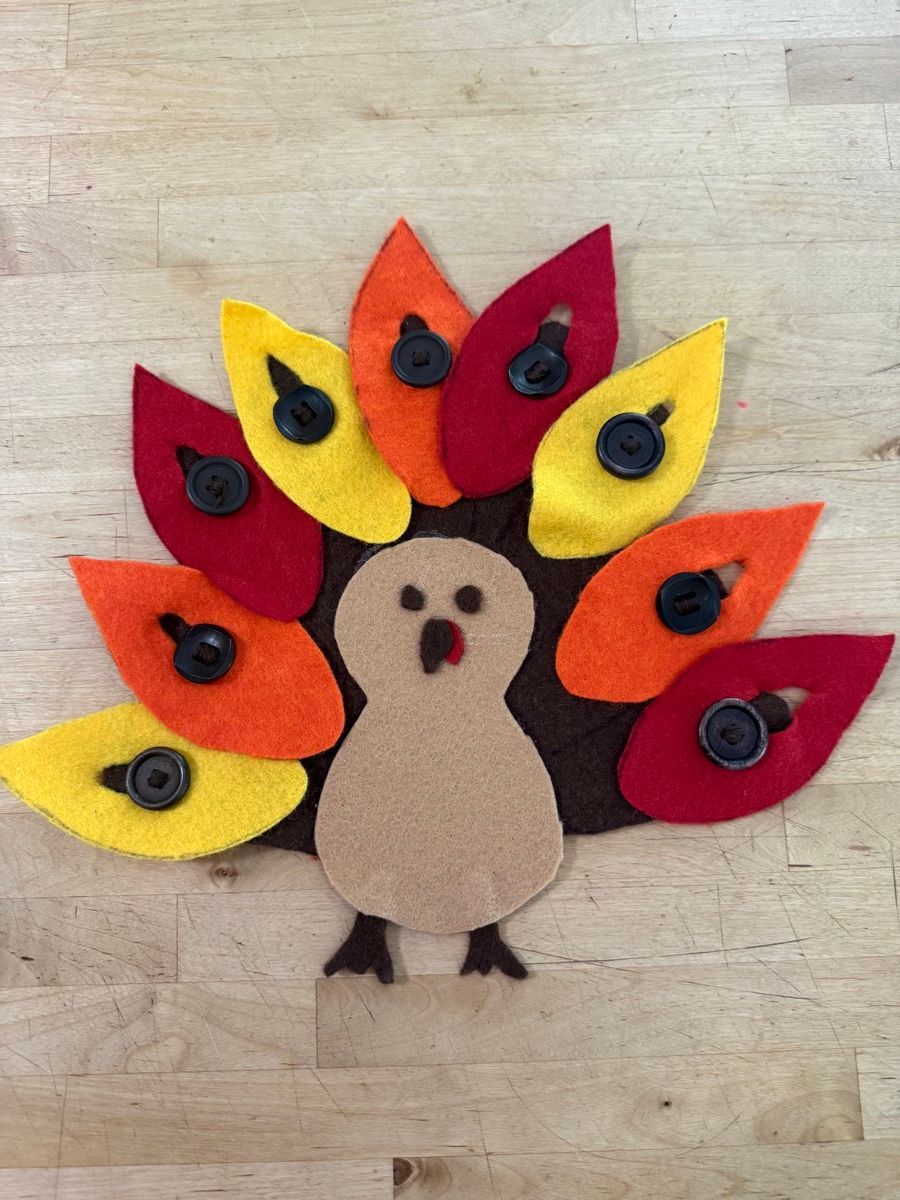
Our Thanksgiving Turkey Buttoning Work brings this classic practical life activity to a seasonal format: a hand-sewn felt turkey with colourful feathers that button on and off. Children work independently, buttoning and unbuttoning the feathers, developing the pincer grip and bilateral coordination the task requires.
The felt material makes it forgiving — buttons slip through felt holes more easily than through thick coat fabric, which makes it accessible to children who are just beginning to work on this skill.
Other Fine Motor Activities to Try
Transferring with tongs or tweezers: set out two small bowls and a collection of pom-poms, dried beans, or small objects. Children transfer items from one bowl to the other using tongs. This builds the same pincer grip as writing.
Lacing cards: thread a shoelace through holes in a stiff card. Children lace and unlace independently, building hand-eye coordination and the over-under movement pattern used in tying shoes.
Playdough: rolling, pinching, and squeezing playdough strengthens hand muscles in a way children rarely resist. Keep a small covered container on the shelf with a mat and a few simple tools.
Threading beads: large wooden beads on a thick cord. Children thread the beads, then remove them and start again. Adjust bead size and cord thickness as coordination develops.
Frequently Asked Questions
At what age should children be able to button independently?
Most children develop functional buttoning skills between ages 4 and 6. With regular practice through dressing frames and materials like the turkey buttoning work, many children are competent by 4. Every child develops at their own pace, and frustration is a signal to step back, not push forward.
How long should fine motor work sessions last?
Let the child lead. Some children will button and unbutton for 20 minutes; others will do two repetitions and move on. Both are fine. The key is that the work is always available and always self-initiated — the child comes to it when they're ready.
My child avoids fine motor work. How do I encourage it?
Seasonal and novelty materials often draw in reluctant workers — a Halloween-themed tong transfer or a Thanksgiving buttoning turkey feels different from a plain dressing frame. Also check that the materials aren't too challenging; starting slightly below a child's level builds confidence and engagement.