How to Set Up a Montessori Language Shelf at Home
One of the most common questions from homeschool families new to Montessori is: "What goes on the language shelf, and in what order?" The short answer is that a language shelf follows the same progression every child moves through in learning to read — from sound awareness, to letter recognition, to word building, to reading. The materials on the shelf just make each step hands-on.
The Progression: What Comes First
Language shelf work follows a clear developmental sequence. Jumping ahead rarely helps and sometimes hinders — a child who doesn't have solid phonemic awareness will struggle with word building no matter how many materials you set out.
The progression is: (1) oral language and vocabulary, (2) phonemic awareness (hearing sounds), (3) letter-sound knowledge, (4) word building with moveable letters or cards, (5) reading simple words and sentences.
Your shelf should have something at each stage your child is working through, not necessarily everything at once.
Vocabulary and Matching Work
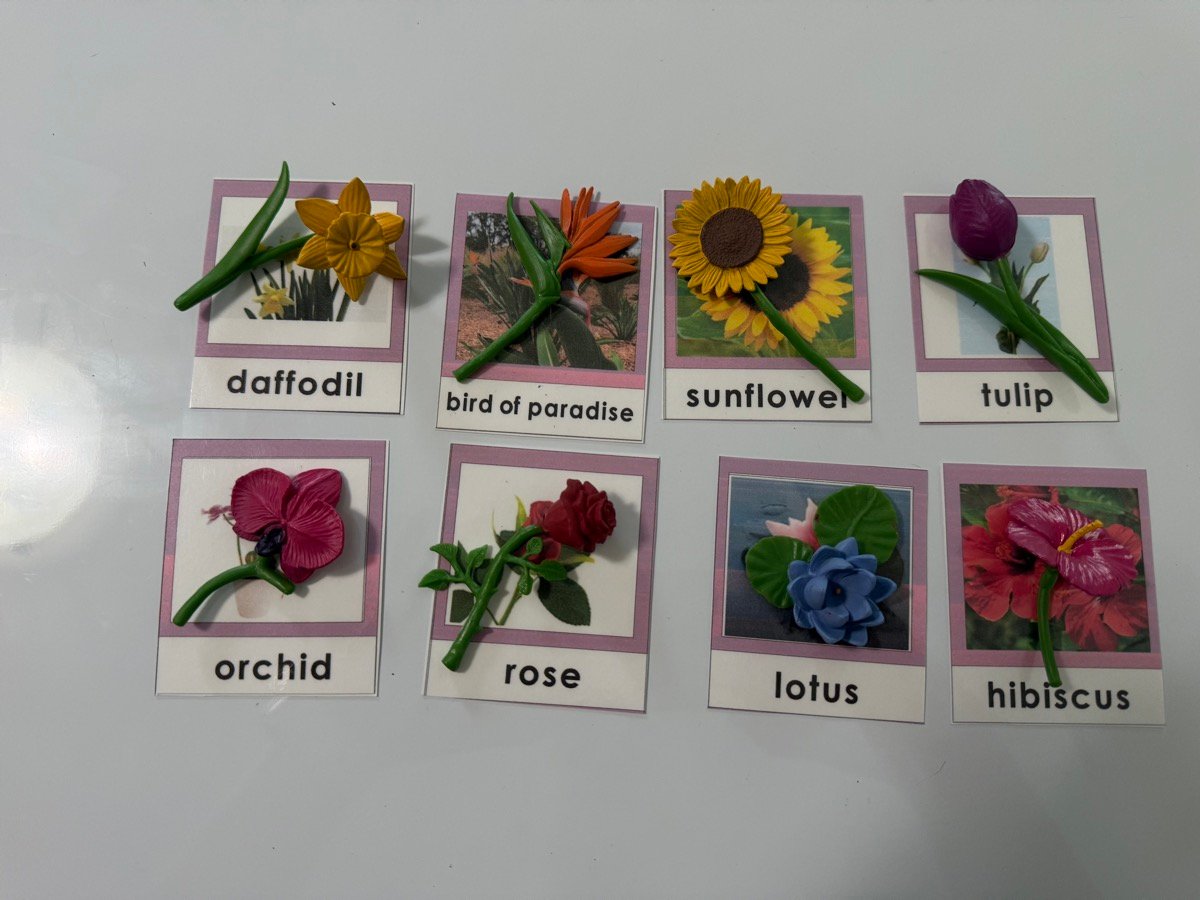
Before formal reading, children need rich vocabulary. Matching works — pairing a picture card to an object, or matching a picture card to a label — build both vocabulary and the habit of careful observation.
Flower matching works are lovely for this stage: a child matches a daffodil card to a daffodil label, a tulip card to a tulip label. The work is self-correcting and can be extended by asking the child to find examples of each flower in books or outside.
Word Building
Once a child knows the sounds of the letters, word building work gives them a way to practise decoding without the pressure of a timed test or a parent watching over their shoulder.
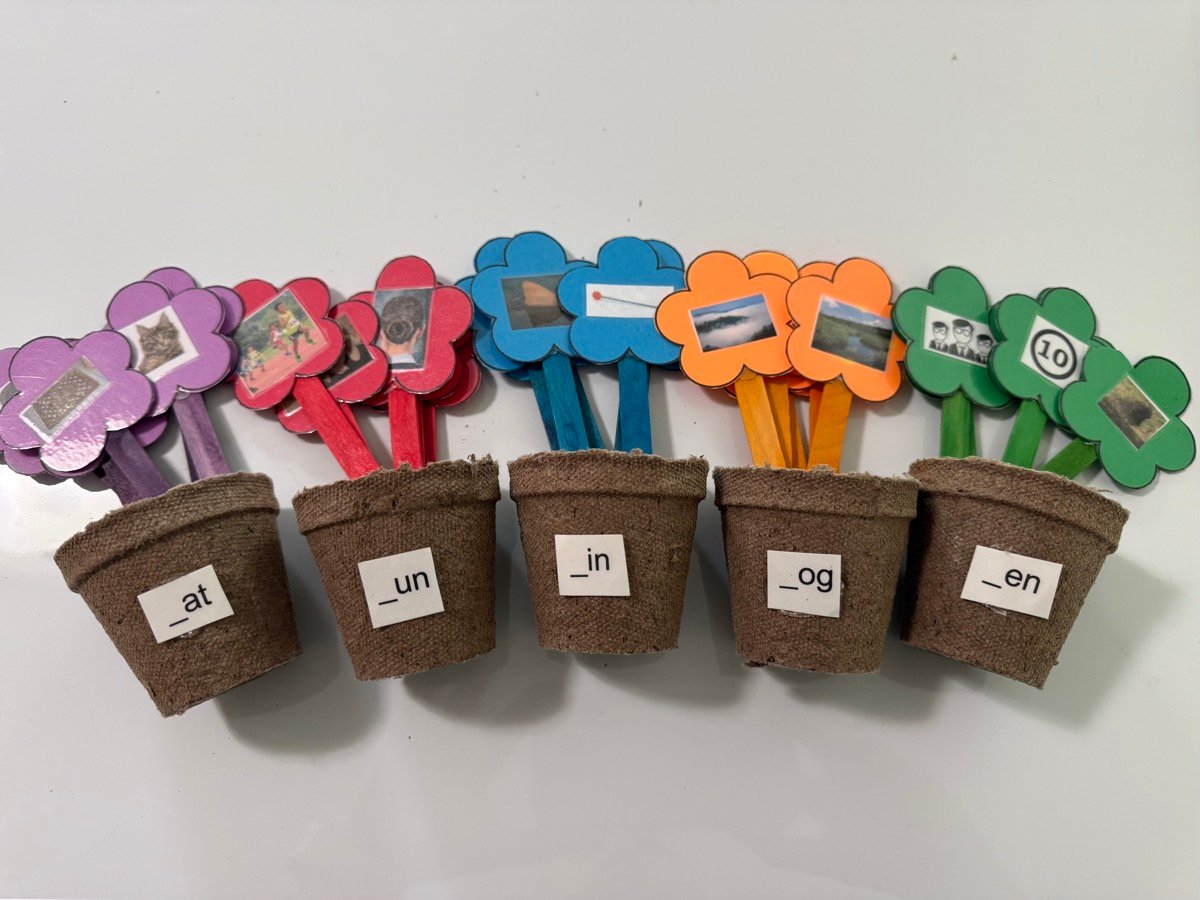
Word family materials are especially effective here. A child sorts picture cards into word family pots (_at, _un, _in) and hears the pattern in the words — that's phonemic awareness and phonics working together.
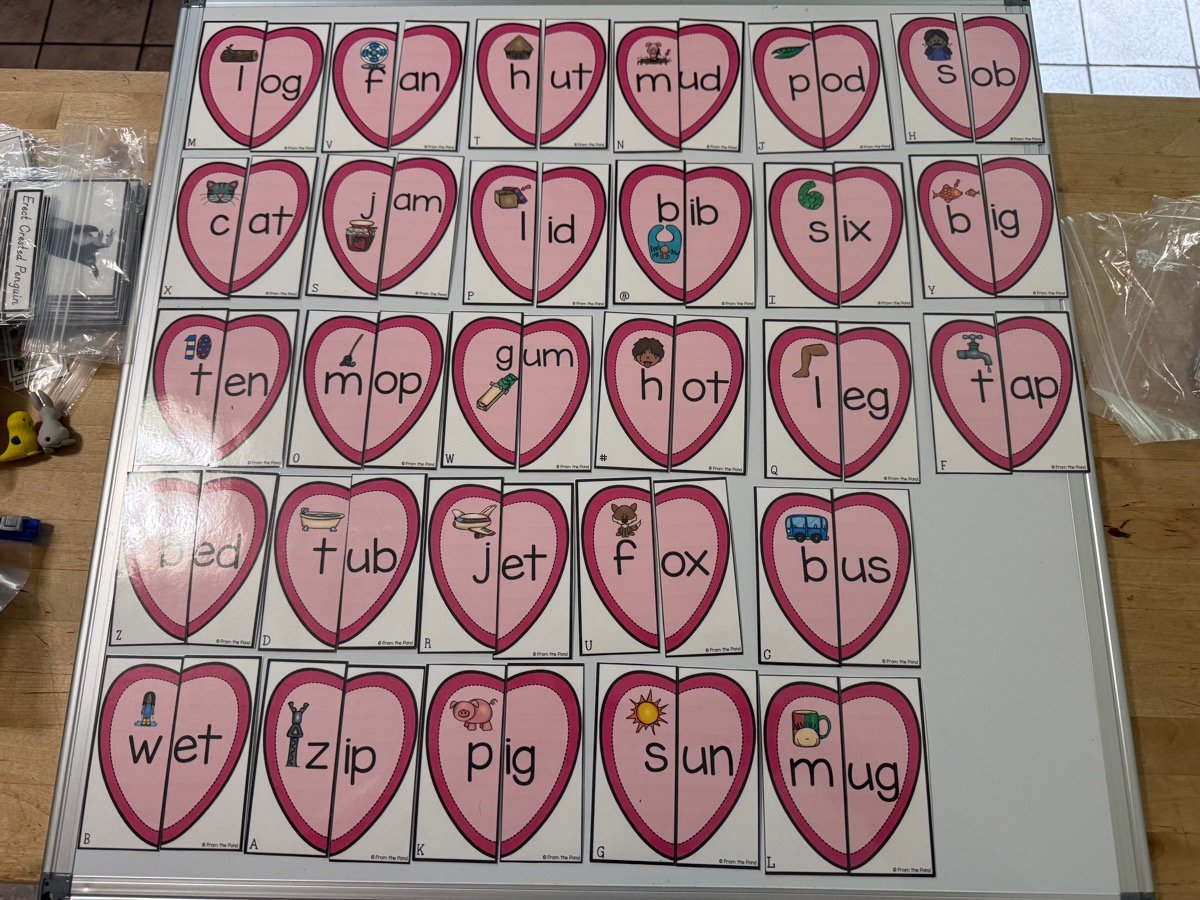
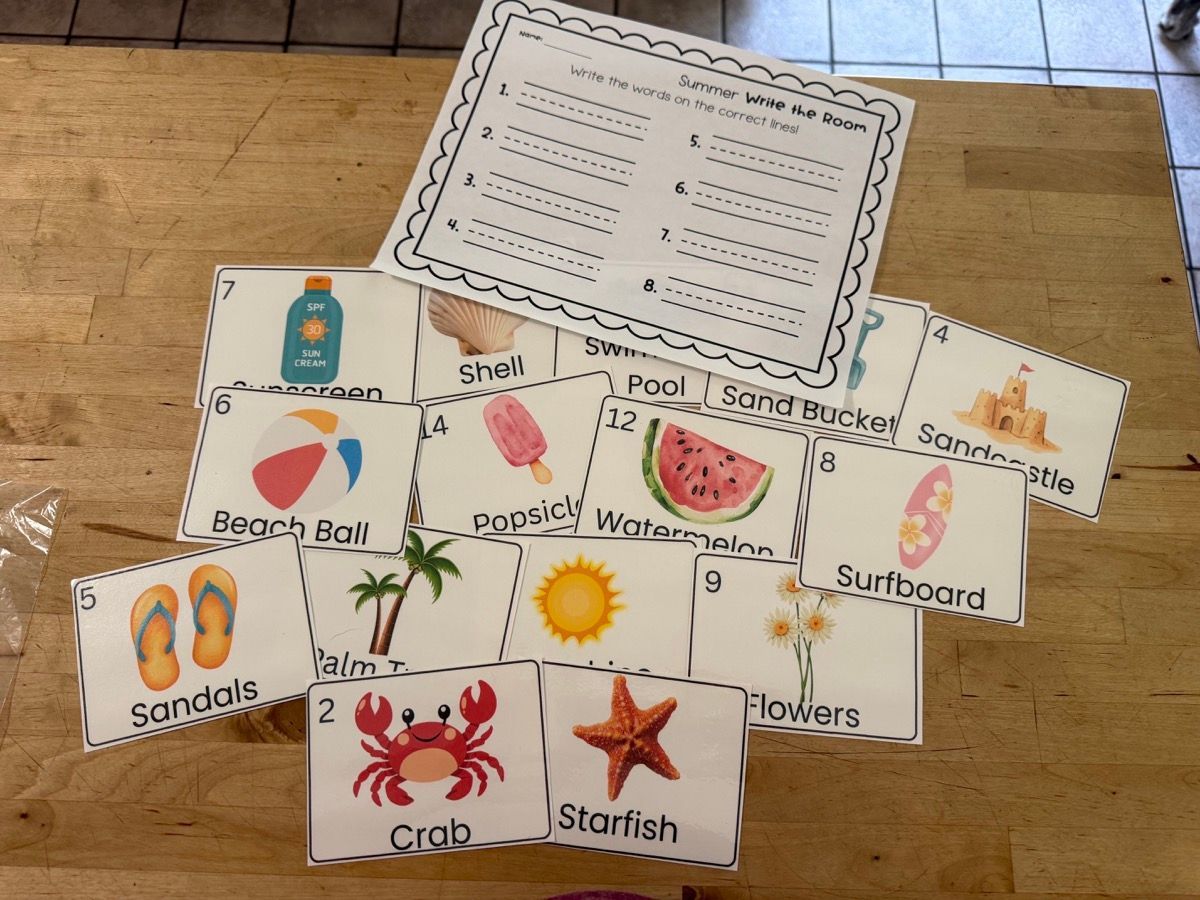
Keep word building work fresh by rotating the materials seasonally. Valentine's Day word cards in February, summer write-the-room cards in June. The content changes but the skill practice continues.
How Much to Put on the Shelf
Less is almost always more. Three or four language works at any one time is plenty for most children. Too many choices leads to overstimulation and work that gets picked up and put back without real engagement.
Rotate materials every one to two weeks, or when you notice a child has mastered a work or lost interest in it. Keep a small storage box nearby with the next few works ready to swap in.
Frequently Asked Questions
Does a Montessori language shelf need to be a real shelf?
Not at all. A low bookshelf, a section of a coffee table, or even a basket on the floor works fine. The important things are that the materials are at the child's level, clearly organised, and accessible independently.
When should I introduce reading books alongside shelf work?
Simple phonics readers can be introduced once a child can reliably decode CVC words. Keep them on or near the language shelf. There's no need to wait until shelf work is "complete" — books and shelf work support each other.
What if my child only wants to do one work and ignores the rest?
That's often fine. Deep engagement with one material is more valuable than sampling everything. If the same work is chosen every day for two weeks, that's a sign it's meeting a real developmental need. Only consider swapping it out when the child seems to have truly mastered it.