What Are Montessori Nomenclature Cards and How Do You Use Them?
If you've spent any time in a Montessori classroom, you've probably seen sets of small cards spread out on a work mat — a picture card, a label card, and a combined "control" card. These are nomenclature cards, and they're one of the most useful and flexible materials in the Montessori language arts tradition.
What Are Three-Part Cards?
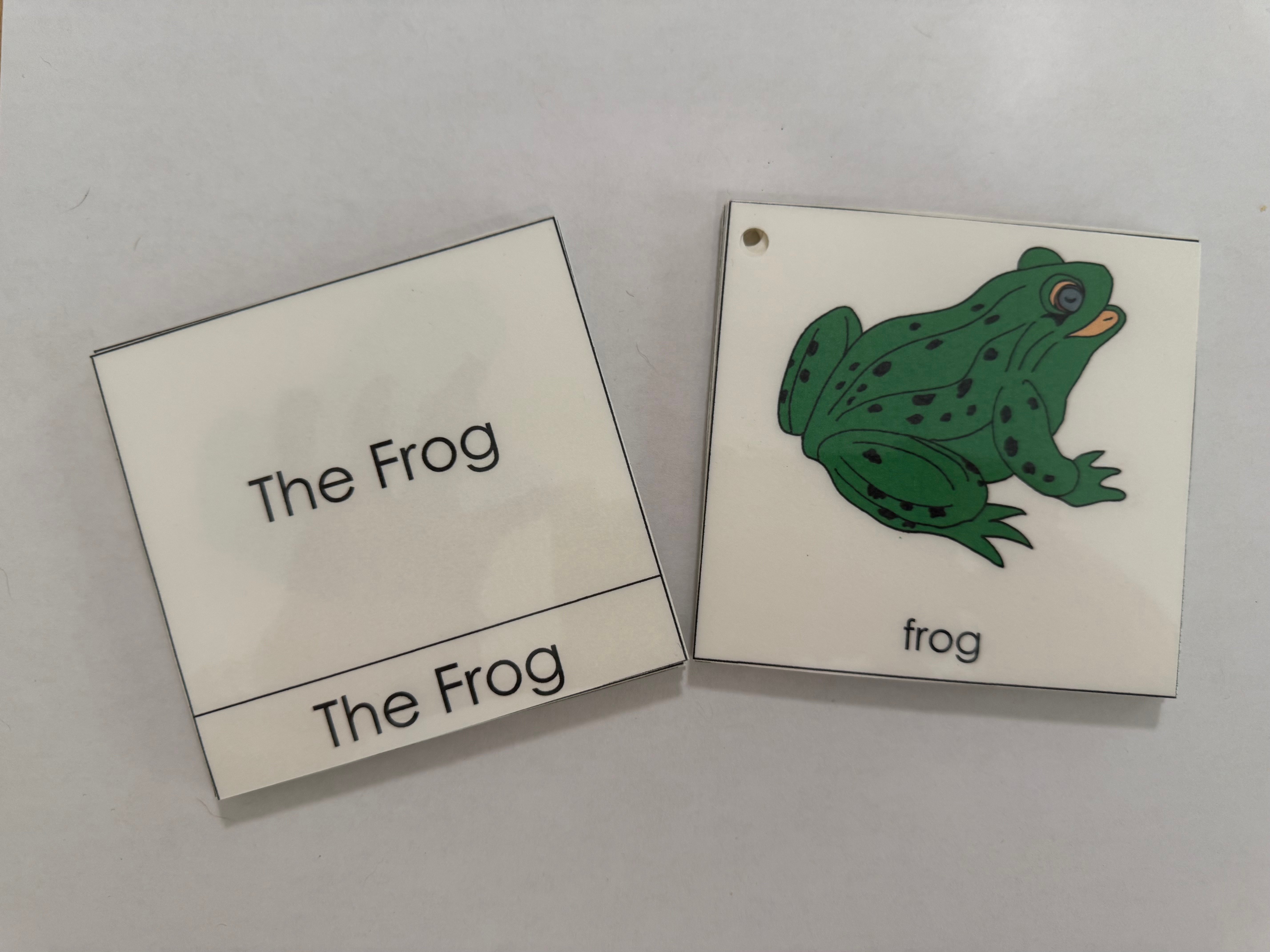
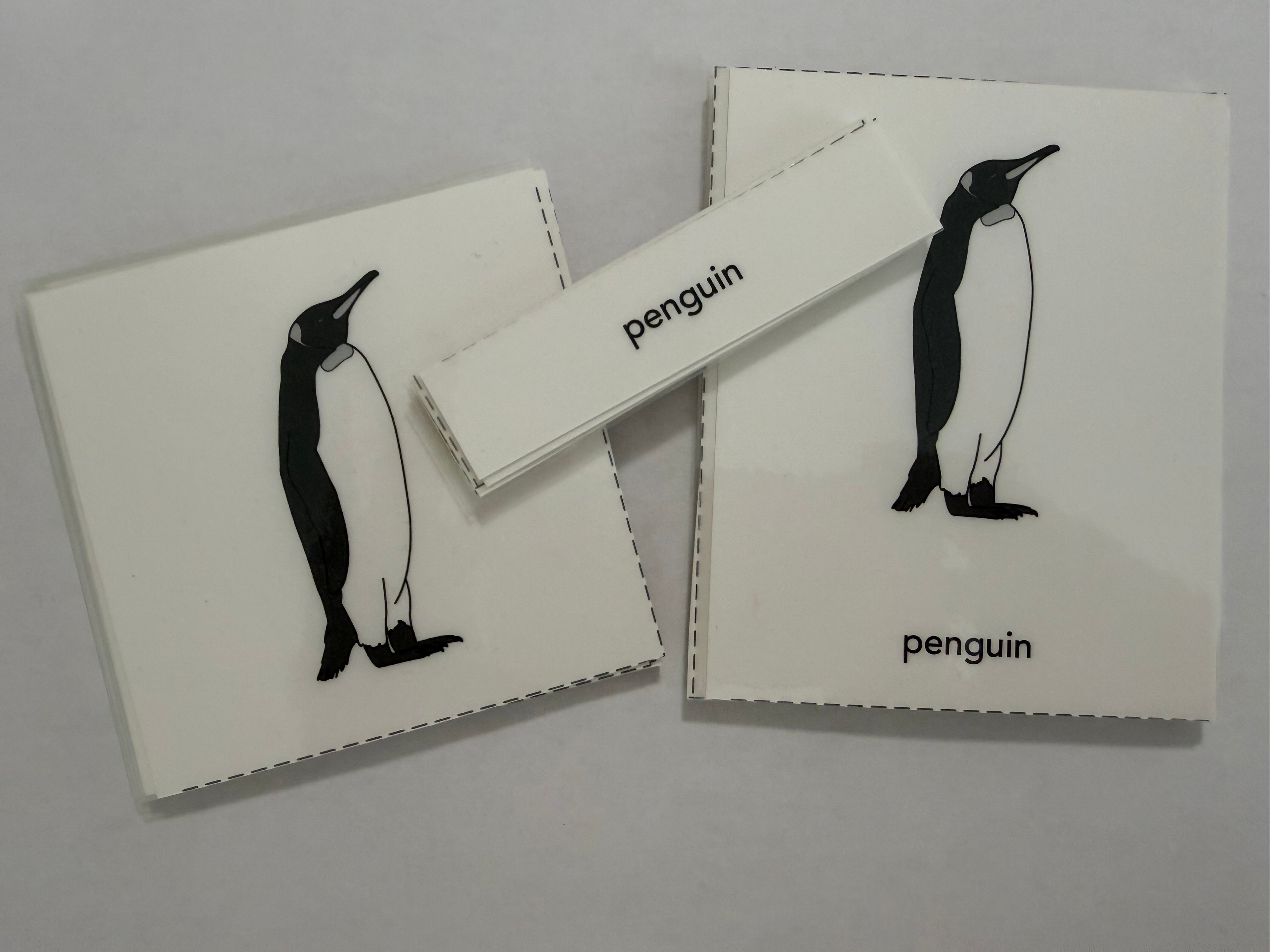
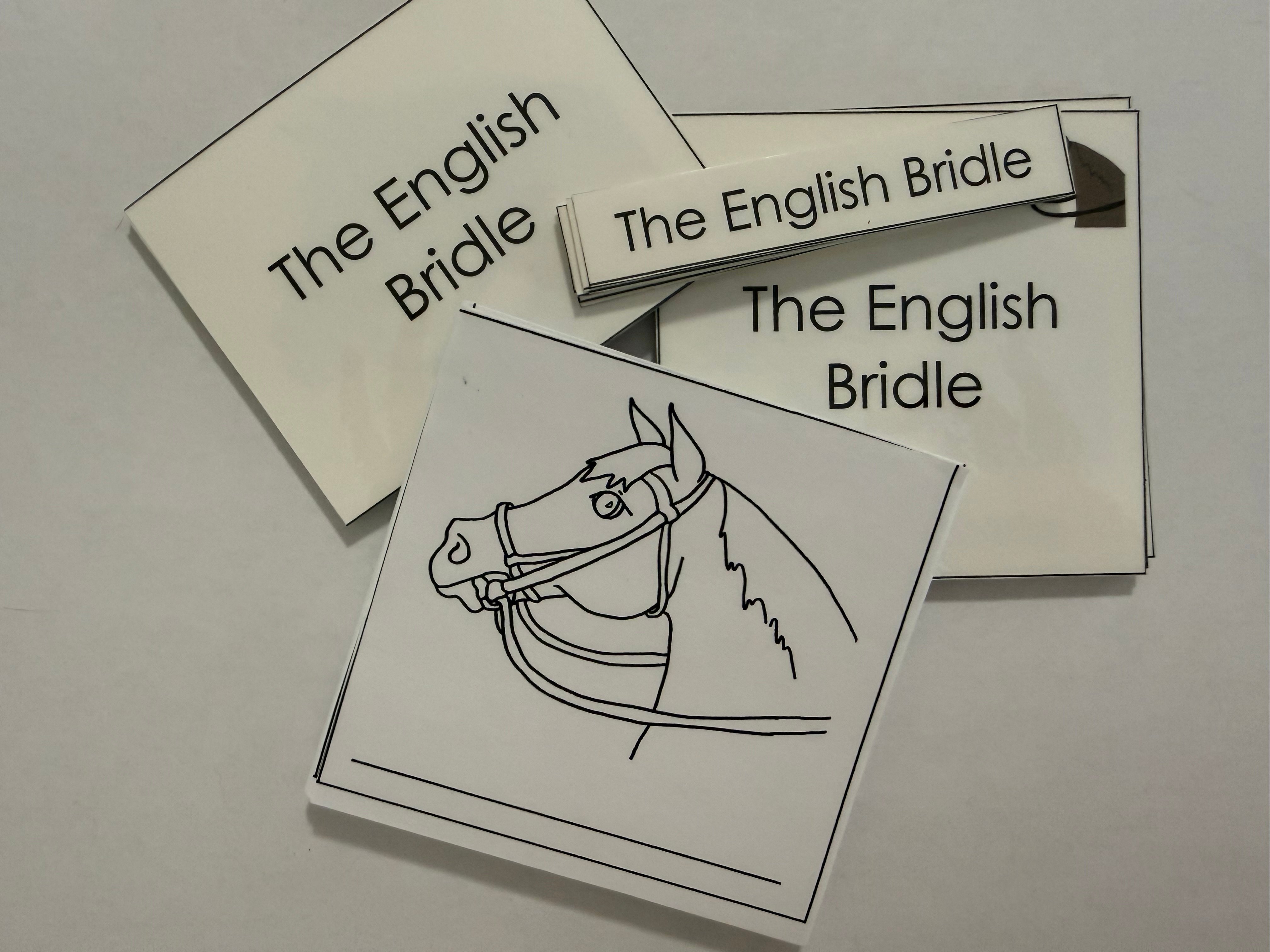
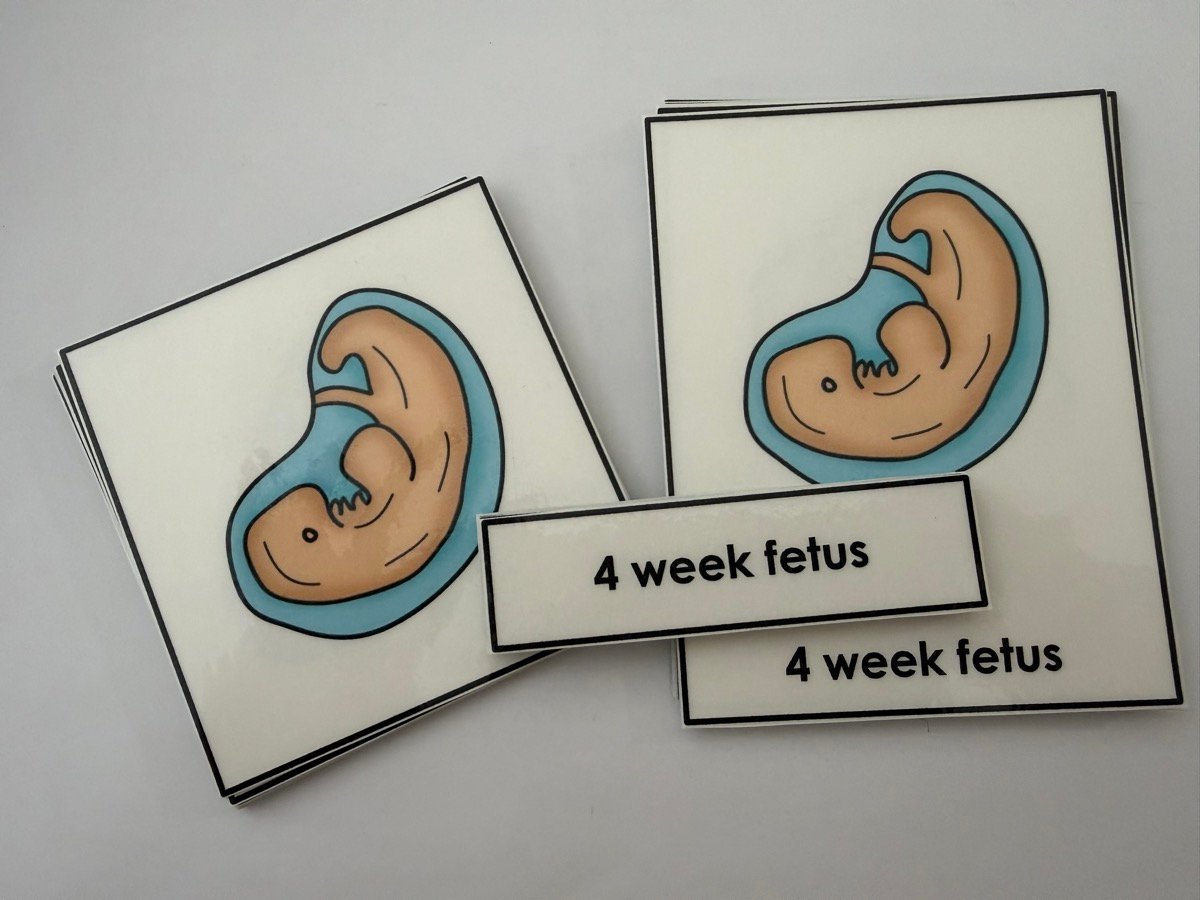
Montessori nomenclature cards are also called "three-part cards" because each concept is broken into exactly three pieces: a picture card (image only), a label card (word only), and a control card (image and word together).
A child works with the picture and label cards independently, matching the correct word to each image. When finished, they use the control card to check their own work — no adult needed. This self-correcting quality is central to the Montessori approach: children build confidence by verifying their own answers.
The materials can cover almost any subject. Science, geography, art history, vocabulary, anatomy — if it can be illustrated and labeled, it can become a set of three-part cards.
What Age Are They For?
Nomenclature cards are appropriate for a wide age range. Simple sets with clear, familiar images (animals, household objects, fruits) work beautifully for children as young as 2.5 to 3 years old who are in the sensitive period for language.
More complex sets — detailed anatomy, fine art, historical figures — are well suited to children in the 4–7 range. The same material can be revisited at different levels: a young child might match pictures, while an older child reads the labels independently and writes them from memory.
How to Present Them in a Classroom or at Home
Start by introducing the control cards together, naming each image clearly. Then mix up the picture cards and label cards separately on a mat. Invite the child to match each label to its picture, then check using the control cards.
For pre-readers, the picture-matching step alone builds vocabulary and observation skills. For emerging readers, the matching work reinforces sight words and phonetic decoding in a context that feels purposeful.
Store each set in a small basket or envelope so the child can take it out and work independently. Rotate sets on the shelf every few weeks to keep the work fresh.
Beyond Animals: Surprising Uses for Nomenclature Cards
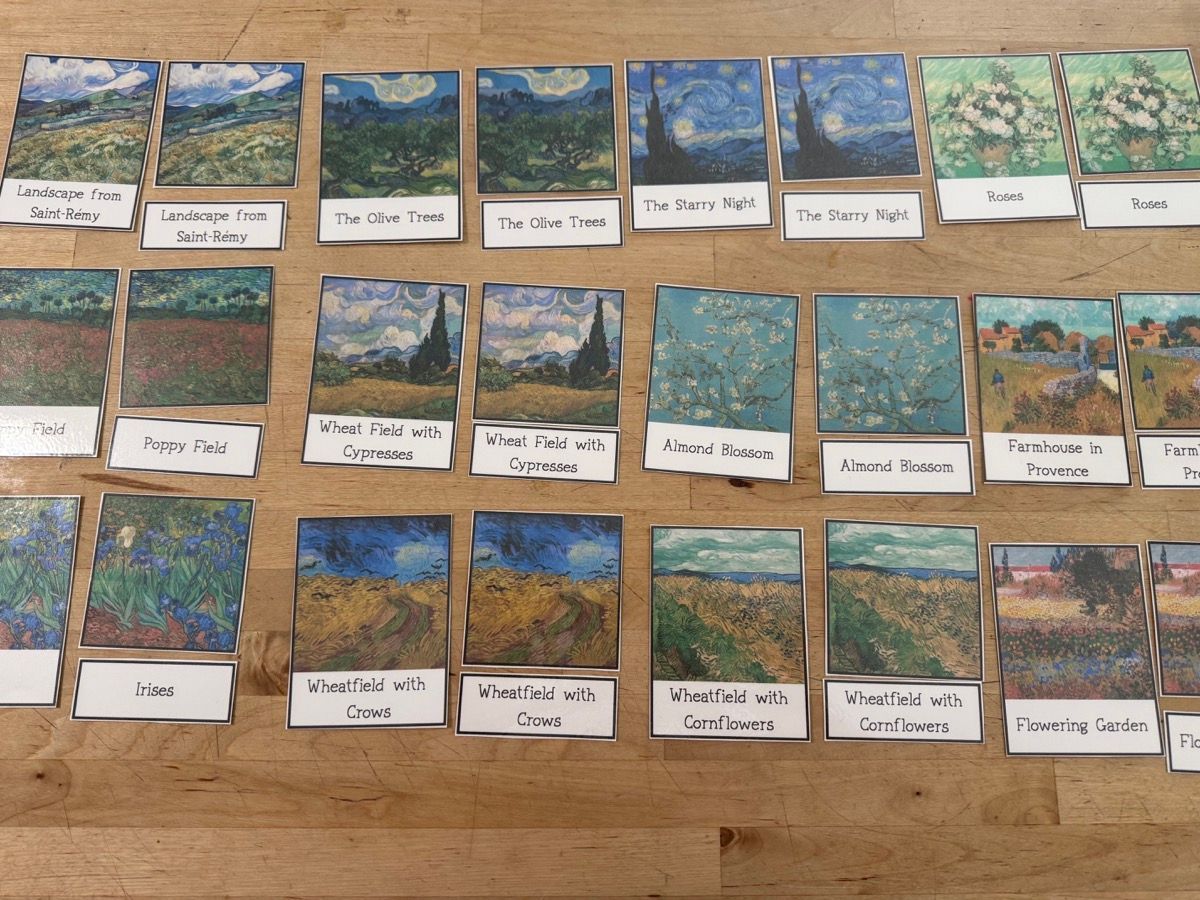
Animal anatomy is the classic starting point, but nomenclature cards shine in unexpected subjects. Art history cards (like our Van Gogh set) introduce children to masterworks through matching and discussion. Human development cards open conversations about biology and growth in a calm, factual way.
For homeschool families, nomenclature cards are especially useful because they require no special training to use. Set them out on the kitchen table, demonstrate the three-step sequence once, and step back. The material does the teaching.
Frequently Asked Questions
Do Montessori nomenclature cards need to be laminated?
Laminating makes them much more durable, especially with young children. If you're using them frequently, it's worth the step. Our cards are printed on cardstock and hand-assembled, and we recommend laminating if you plan to use them daily.
Can I use nomenclature cards with children who can't read yet?
Yes — that's one of their best features. Pre-readers use the picture cards for matching and vocabulary building. The label cards become relevant once a child begins recognising written words, so the same set grows with the child.
How many cards should be in a set?
Most Montessori three-part card sets contain between 6 and 14 pairs. Too few and there's not enough vocabulary; too many and the work becomes overwhelming for a young child. Our sets are sized to hit that sweet spot.
Where do nomenclature cards go on the Montessori shelf?
Animal and science-themed sets typically live on the science or cultural shelf. Language-themed nomenclature cards can go on the language shelf. Art cards are lovely in their own basket near any art prints or postcards you have displayed.